Vauxhall Bridge Road small van rubbish pickup for tight access
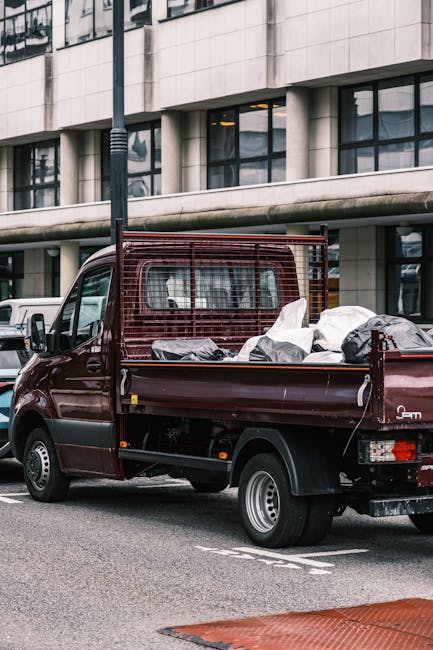
If you need a Vauxhall Bridge Road small van rubbish pickup for tight access, you are usually dealing with the kind of job that looks simple from the pavement and turns awkward the moment you get closer. Narrow entrances, basement steps, shared corridors, parked cars, low arches, busy delivery times - it all adds up. In a street like Vauxhall Bridge Road, where access can be tight and timings matter, using a compact vehicle can make the difference between a smooth pickup and a frustrating delay.
This guide explains what a small van pickup involves, why it is often the better fit for restricted access, how the process works, and what to check before you book. It also covers the practical stuff people forget in the rush: waste types, loading access, safety, compliance, and how to avoid paying for the wrong solution. Truth be told, a lot of rubbish removal jobs become easier once the vehicle choice is right.
Whether you are clearing a flat, an office, a shop storeroom, or simply a cluttered back area that cannot take a larger truck, this article will help you decide if a smaller rubbish collection vehicle is the sensible option.
Why Vauxhall Bridge Road small van rubbish pickup for tight access Matters
Tight access changes everything. A standard bulky vehicle may be the wrong fit if your rubbish is tucked behind a courtyard gate, down a narrow passage, through a side entrance, or in a building where turning space is limited. On Vauxhall Bridge Road, that kind of access issue is not unusual. The area can involve busy traffic, mixed-use buildings, loading constraints, and properties where the easiest route for removal is not the largest one.
A small van rubbish pickup matters because it reduces friction. It can be easier to position, easier to load, and less disruptive to neighbours, staff, and passers-by. That may sound obvious, but in practice it saves time, lowers the risk of damage, and helps the collection feel organised rather than improvised.
It also matters from a customer point of view. If you are clearing waste from a flat conversion, office, or retail unit, you probably do not want a long wait while a larger vehicle tries to reverse into somewhere it never should have gone. A compact van can often get closer to the source of the waste, which means less carrying distance and fewer handling headaches.
Expert summary: For restricted sites, the best rubbish pickup is not always the biggest one. It is the one that can actually reach the waste safely, load it efficiently, and leave the space undisturbed.
There is a practical side too. Smaller vans are often the cleaner answer for mixed urban settings where access is awkward but the waste load is moderate. If you only have a few bulky items, a modest pile of bagged waste, or a handful of items from a clearance, using a compact vehicle can simply be the smart move. No drama. No overkill.
How Vauxhall Bridge Road small van rubbish pickup for tight access Works
The process usually starts with a quick assessment. You describe what needs removing, where it is located, and how easy it is to reach. Good operators will want to know whether there are stairs, lifts, low ceilings, narrow corridors, secure doors, or parking restrictions. That information shapes the vehicle choice and helps avoid surprises on the day.
Once the job is confirmed, a small van is scheduled to arrive at the agreed time. The team will usually park as close as legally and safely possible, then assess the route from the waste to the vehicle. For tight-access jobs, that route is just as important as the waste itself. A ten-metre carry through a cluttered hallway is a very different job from a simple curbside pickup.
From there, items are loaded carefully into the van. Depending on the material, the crew may sort as they go, separating reusable or recyclable items from general waste where practical. That is where experience shows. A calm, methodical load-up tends to be quicker than a rushed one, and it reduces the chance of scuffed walls, broken fixtures, or a badly packed vehicle.
For many customers, the whole point is speed without chaos. A van-based collection can be completed in a single visit if the load has been described accurately. If more than one trip is needed, the team should say so clearly before work starts. That transparency matters.
When access is especially tight, a few small adjustments often help:
- move smaller items nearer to the collection point before arrival
- measure door widths and stair turns in advance
- check whether building management requires prior notice
- reserve any required loading bay or short-stay parking if possible
- keep the route to the waste clear of trip hazards
That last one is easy to overlook. A wobbling box, a trailing cable, or a half-open door can slow everything down. Small stuff, big difference.
Key Benefits and Practical Advantages
The clearest advantage is access. A small van can usually get into spaces that would be awkward for larger rubbish vehicles. That can matter on streets with limited stopping room, in service yards, around residential blocks, or where the waste is not on the ground floor.
Another benefit is less disruption. Smaller vehicles are often easier to position without blocking entrances, creating congestion, or making a scene of the pickup. If you are working in a shared building, that can help you stay on good terms with neighbours and building managers. Let's face it, nobody enjoys a clumsy collection that seems to take over the whole street.
There is also a practical handling benefit. Because the team can park nearer to the waste, there may be less lifting and carrying over long distances. That can reduce strain and lower the risk of accidental damage. In a cramped environment, a few metres can make a real difference.
Other useful advantages include:
- Flexibility: better suited to mixed loads and smaller clearances
- Efficiency: quicker setup when space is limited
- Lower disruption: less need for large vehicle manoeuvring
- Better fit for urban jobs: useful in dense, busy, or restricted streets
- More controlled loading: easier to manage when items are spread across several rooms
And yes, small vans are not the answer for every job. If you have a full property clearance or a heavy builders' load, a bigger solution may still be better. But for a tight-access pickup in central London conditions, compact often wins.
Who This Is For and When It Makes Sense
This service is a strong fit for people who need rubbish removed from places that are difficult to reach or awkward to park near. That could be a landlord emptying a flat, a facilities manager clearing office waste, a shop owner dealing with back-room clutter, or a resident who has a couple of large items that simply will not fit in a car. You do not need a major clearance to justify a van-based pickup. Sometimes the access problem is the real problem.
It makes particular sense if you are dealing with:
- tight hallways or stairwells
- basement storage areas
- shared courtyards or internal mews spaces
- limited roadside parking
- small office or retail clear-outs
- bagged waste stored in a rear garden or service area
- single bulky items such as furniture or appliances
If your waste is mostly general household clutter, you might also want to look at broader services such as home clearance or flat clearance. For workplace removals, office clearance and business waste removal can be more appropriate. The point is to match the service to the job, not the other way around.
One easy sign you need a smaller vehicle is when you find yourself saying, "A bigger truck would make things worse, not better." That is usually the clue.
Step-by-Step Guidance
If you want the pickup to go smoothly, a little preparation goes a long way. Here is the simple version.
- List what needs removing. Include bulky items, bagged waste, loose debris, and anything awkward such as broken shelving or dismantled furniture.
- Note the access route. Measure doors, stairs, lifts, alleyways, and any pinch points. If there is a low arch or a narrow gate, mention it early.
- Check parking and stopping options. Even a small van needs a legal and safe place to pause. If the street is busy, timing matters.
- Separate restricted items. Keep aside anything that may need special handling, such as appliances or potentially hazardous materials.
- Get a realistic quote. A good quote depends on volume, weight, access, and loading effort. If someone ignores access details, that is a bit of a warning sign.
- Prepare the site. Clear a path, secure pets, protect fragile surfaces, and make sure someone can grant access if needed.
- Confirm the handover. On arrival, walk through the route and point out any obstacles before lifting begins.
If the job includes mixed waste or items that could be reused or recycled, ask about sorting and disposal options. Services linked to waste removal and recycling and sustainability can be useful when you want the clearance to be handled thoughtfully rather than dumped into one heap and forgotten.
Small note, but it helps: if the pickup is on a tight schedule, do not leave access checks until the last minute. That is how decent plans become messy ones.
Expert Tips for Better Results
In our experience, the jobs that run best are the ones where the customer gives clear access details up front. You do not need to write a novel. Just be specific. "Third-floor flat, narrow staircase, no lift, parking outside from 10 a.m." is far better than "it should be fine."
Here are a few practical tips that often make a real difference:
- Photograph the access route. A quick picture of the gate, corridor, or parking space can save a lot of back-and-forth.
- Stack waste neatly. Loose piles take longer to load and can block the route.
- Keep heavy items separate. If possible, place them closest to the exit so the heaviest lifting happens once.
- Protect surfaces. Old blankets or cardboard can help around tight corners and painted walls.
- Be honest about volume. A van can only take so much. People sometimes understate the pile by, well, quite a lot.
Another good habit is to think in terms of loading order. Lightweight bags first, bulky items next, heavy items where they can be secured properly. That sort of thing sounds minor until you see a van packed badly and hear everything shift on the first bend. Not ideal.
If furniture or appliances are involved, related pages such as furniture disposal, furniture clearance, and fridge and appliance removal can help you think through what needs special handling.
Common Mistakes to Avoid
The most common mistake is booking the wrong size vehicle because the waste volume looked small from a distance. Once you start gathering items, the pile often grows. A couple of boxes become a roomful of mixed stuff, and then access matters even more because the load has to be carried through the property.
Another frequent issue is forgetting about parking. A small van helps with manoeuvrability, but it does not magically eliminate London parking realities. If the vehicle cannot stop close enough, the job becomes slower and more expensive. It is that simple.
People also miss these details:
- not mentioning stairs or lifts
- leaving fragile or sharp items mixed into soft waste
- assuming appliances can go with general rubbish
- putting hazardous items in the same group as normal waste
- not clearing the route before the crew arrives
A smaller but important mistake is ignoring the paperwork side. Even straightforward collections should be handled by a responsible operator with proper procedures. If the job involves business waste, there may be additional expectations around handling, transfer, and recordkeeping. More on that below.
And honestly, one of the easiest ways to make a simple pickup annoying is to say "it's only a few bits" when the reality is quite a bit more. Better to be a touch over-cautious than wildly optimistic.
Tools, Resources and Recommendations
You do not need specialist equipment to prepare for a small van rubbish pickup, but a few basic tools help. A tape measure is the obvious one. It is worth checking the width of gates, the tightest stair turn, and the height of low ceilings or overhanging pipes. A phone camera is almost as useful, especially if you want to show the access route before the visit.
Handy items include:
- moving straps or strong bags for loose waste
- gloves for safe handling of sharp or dirty items
- blankets or cardboard to protect corners and floors
- marker tape for highlighting items to be removed
- a simple checklist of rooms and access points
For more specialised needs, it helps to look at the relevant service page rather than treating everything as generic rubbish. If you are clearing out a garage, garage clearance may be the better fit. For a loft, loft clearance is often more practical. For garden waste, garden clearance can be the right route. And for bigger household jobs, house clearance is worth considering.
It is also sensible to review commercial pages such as pricing and quotes and book online if you want a straightforward way to move from planning to action. If you value company credentials, about us, insurance and safety, and health and safety policy are useful pages to review before you commit.
Law, Compliance, Standards, or Best Practice
For rubbish pickup in the UK, compliance is less about jargon and more about doing things properly. You should expect waste to be handled by a responsible operator who knows how to separate general waste, recyclable materials, and items that need special treatment. If any hazardous or unusual waste is involved, that must be handled separately and carefully. No shortcuts there.
For businesses, the standards tend to be stricter in practice. Office clear-outs, shop clearances, and trade-related waste should be managed in line with sensible duty-of-care principles. That means using the correct handling process, keeping things traceable where needed, and not mixing everyday rubbish with materials that require special disposal. If you are dealing with paper records or confidential material, a page like confidential shredding may be relevant.
Safety is also part of the picture. Tight access increases the chance of trips, bumps, and awkward lifts. Good practice is to keep routes clear, lift carefully, and avoid forcing large items through spaces that are clearly too narrow. If a route looks unsafe, it probably is. That is the polite version.
If the job includes anything that could be classed as hazardous, check the dedicated information on hazardous waste disposal. For bulky household items like mattresses or sofas, specialist handling pages such as mattress and sofa disposal can also be useful. The main thing is not to treat everything as one-and-done rubbish. Different materials need different handling.
Finally, if you care about where items end up, ask about recycling routes and disposal standards. A properly managed collection should not just remove waste; it should also deal with it in a responsible way. That is basic professionalism, not a bonus extra.
Options, Methods, or Comparison Table
Choosing the right approach depends on access, waste type, and how much handling you can reasonably manage yourself. Here is a simple comparison to help you think it through.
| Method | Best for | Strengths | Limitations |
|---|---|---|---|
| Small van rubbish pickup | Tight access, moderate loads, awkward parking | Flexible, compact, easier to position, less disruption | Not ideal for very large or heavy clearances |
| Large vehicle collection | Bulkier clearances with easier access | Higher capacity, fewer trips | Needs more space and more manoeuvring room |
| Self-loading into a hired container | Sites with space and time to load independently | Useful for ongoing work, predictable loading window | Less flexible in narrow streets and busy locations |
| Targeted clearance service | One category of waste, such as furniture or appliances | Clear scope, easier sorting, better match for specialist items | May not suit mixed loads from several rooms |
For many Vauxhall Bridge Road jobs, the small van option strikes the right balance. It is the middle ground between overcommitting and under-preparing. If your load is mainly commercial, you might lean toward business waste removal; if it is more of a domestic clean-out, then home clearance may make better sense. Small details, but they matter.
Case Study or Real-World Example
Picture a small office above street level with a narrow stairwell and no useful lift access. The team has several broken desk chairs, a couple of filing cabinets, boxed packaging, and a few bags of old paperwork. A larger vehicle could have made the street side more awkward than necessary, especially with limited stopping space. Instead, a compact van was used, parked close enough to reduce carry distance, and the clearance was completed without blocking the whole frontage.
The useful part of that example is not the quantity of waste. It is the access pattern. The job was never about maximum capacity. It was about fitting the vehicle to the building and keeping the whole process calm. There was a brief pause while the stair landing was checked, and someone from the office moved a plant pot that had become a very inconvenient obstacle. Nothing dramatic. Just normal city work.
The takeaway? If access is the constraint, solve for access first. The rest tends to fall into place.
Practical Checklist
Use this before booking or on the morning of the pickup:
- Have I listed every item that needs removing?
- Do I know the narrowest point on the access route?
- Is parking or stopping likely to be an issue?
- Have I flagged stairs, lifts, basements, or low ceilings?
- Are any items hazardous or likely to need special handling?
- Have I separated reusable, recyclable, and general waste where possible?
- Is the route clear of boxes, cables, or trip hazards?
- Have I protected walls, floors, or corners if the route is tight?
- Can someone grant access or answer questions on arrival?
- Do I understand the quote and what it includes?
If you can tick most of those off, you are in good shape. If not, take five minutes and sort the missing pieces now. It usually pays off.
Get a free quote today and see how much you can save.
Conclusion
Vauxhall Bridge Road small van rubbish pickup for tight access is really about matching the method to the real-world conditions on site. When parking is limited, routes are narrow, or the waste sits in a hard-to-reach place, a compact vehicle can make the job far smoother than a larger alternative. The result is usually less disruption, fewer handling issues, and a collection that feels under control from start to finish.
If you prepare well, describe the access clearly, and choose the right service for the waste type, the pickup should be straightforward. Not always effortless - London rarely gives you effortless - but definitely manageable. And that is often what people need most: a tidy, practical solution that does the job without turning the day upside down.
When the waste is gone and the space is clear, the relief is immediate. You can hear the building again. That quiet after a proper clearance is a very good sound.
Frequently Asked Questions
What counts as tight access for a rubbish pickup?
Tight access usually means the vehicle cannot park right beside the waste or the route to the waste is narrow, awkward, or restricted. That might include narrow stairwells, basements, shared entrances, low arches, or streets with very limited stopping space.
Why use a small van instead of a larger vehicle?
A small van is often easier to position on busy roads and in restricted spaces. It can reduce carry distance, lower disruption, and make collections more practical when larger vehicles would struggle to manoeuvre safely.
Is a small van suitable for flat clearances?
Yes, especially where access is limited or the clearance is moderate rather than large-scale. If the job involves multiple rooms or bulky furniture, a small van can still be useful if the access route is the main challenge.
Can a small van handle office rubbish?
It can, provided the volume is manageable and access is awkward enough to justify a compact vehicle. For workspaces, it is worth checking whether the waste is general office clutter, confidential material, or something that needs separate handling.
How should I prepare for a pickup on Vauxhall Bridge Road?
Measure the access route, confirm parking options, separate any special items, and clear the path from the waste to the vehicle. A few photos can also help the team plan properly before arriving.
What if my waste includes furniture or appliances?
Furniture and appliances often need a bit more care than bagged waste. It is sensible to mention them early and look at relevant service options such as furniture disposal or fridge and appliance removal if those items are part of the job.
Do I need to sort recyclable items first?
It helps, but it is not always essential if the service provider can sort during collection. If you want the process to be more efficient, separating cardboard, metal, and reusable items in advance is a good move.
What happens if the van cannot access the property?
If access turns out to be worse than expected, the team may need to adjust the collection method, reposition the vehicle, or in some cases re-schedule if the site is unsafe or impossible to reach as planned. Clear communication beforehand reduces that risk a lot.
Are there compliance issues I should know about?
Yes, especially if the waste is commercial, hazardous, or includes confidential material. Responsible handling, correct segregation, and safe lifting practice all matter. If you are unsure, ask before the job begins rather than after.
How do I know if I need a full clearance instead?
If you are clearing several rooms, multiple bulky items, or a large mixed pile, a more comprehensive service may fit better. For households, home clearance or house clearance can be more suitable; for businesses, office clearance or business waste removal may be the better route.
Is a small van pickup cheaper?
Not automatically. Price depends on volume, weight, access, and the type of waste. A small van can be more efficient for tight-access jobs, but the best quote still depends on the full picture rather than the vehicle size alone.
What should I ask before booking?
Ask what is included in the quote, how access affects the price, whether special items need separate handling, and what happens if the load is larger than expected. Those four questions clear up most problems before they start.
Where can I learn more about the company and its policies?
Helpful pages to review include about us, pricing and quotes, recycling and sustainability, insurance and safety, and health and safety policy. They give you a better sense of how the service is run and what standards to expect.